Table Of Content
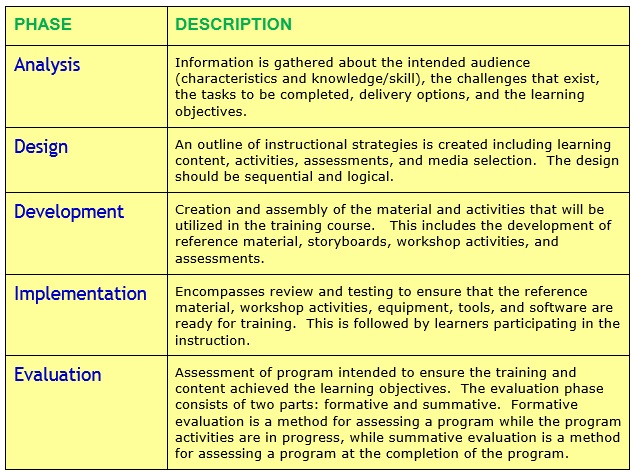
The implementation phase entails the transformation of the plan into action. The steps of the implementation phase include training the educators, arranging the learners, and organizing the environment for learning suitability (Morrison, Ross, & Kemp, 2007). Training the educators before the start of the course will help increase their understanding and awareness of the content and materials. It is imperative that the learners have access to the essential materials, tools, and knowledge, so that they may contribute more effectively to group discussions and activities. The learners should be familiar with the information presented in the course, in order to ensure the expansion of knowledge and skillsets, learning, and growth.
Technology & Tools
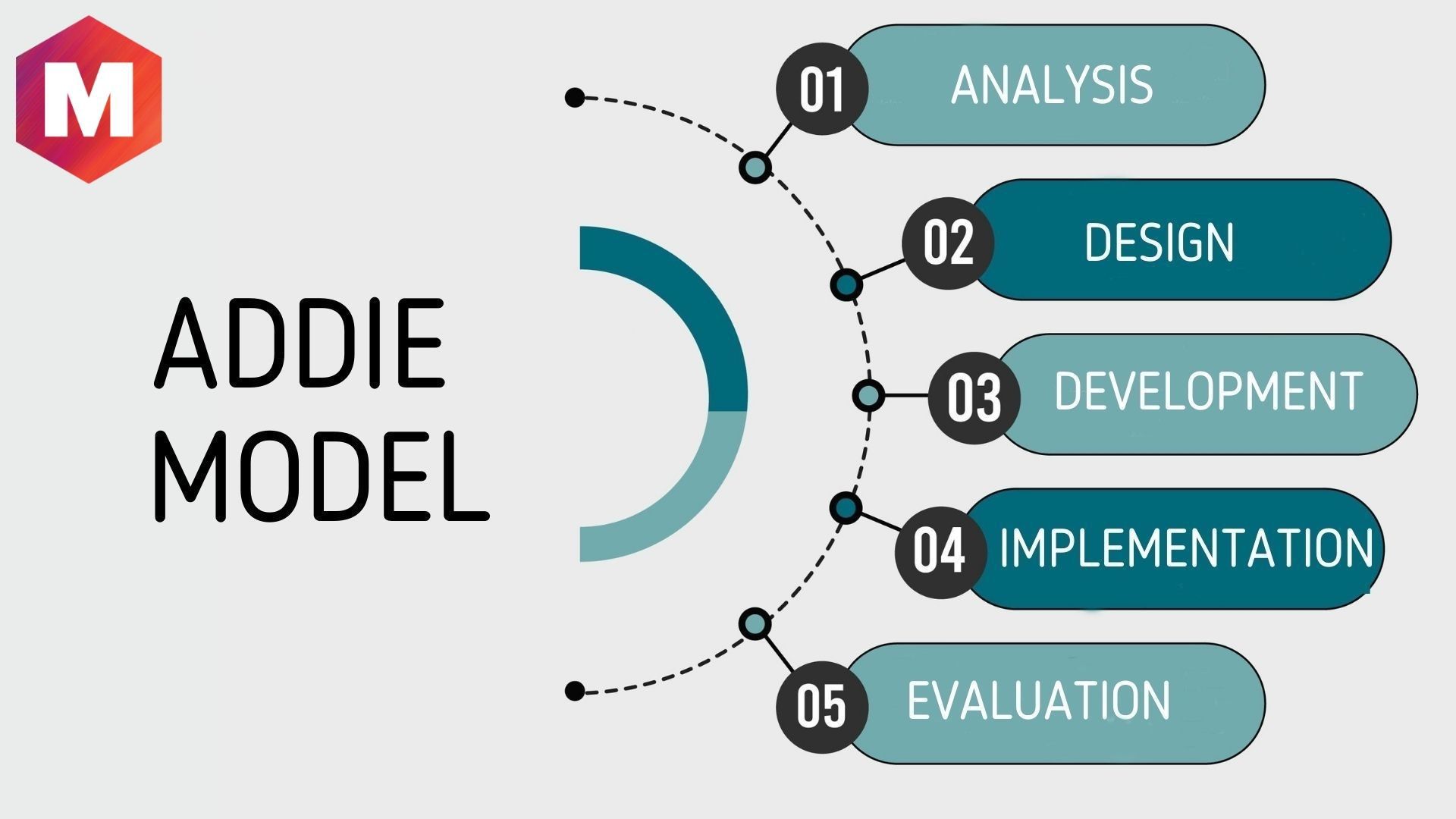
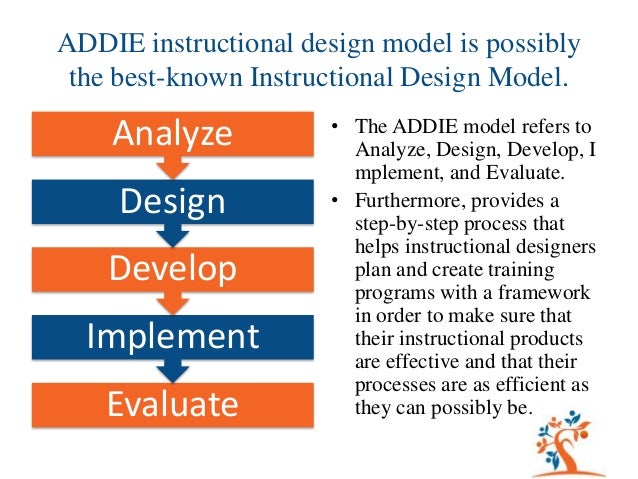
These materials undergo rigorous evaluation and refinement to ensure they align with the established learning objectives and instructional design principles. This active and collaborative approach sets the stage for the finalization of materials ready for implementation in the next phases of the ADDIE model. ADDIE is a standard procedure and method used by instructional designers and training creators. The model’s phases include analysis, design, development, implementation, and evaluation. Each of the phases represents a dynamic and flexible standard for developing efficient training and performance support instruments (McIver, Fitzsimmons, & Flanagan, 2015). In the present era, ADDIE is considered the most commonly implemented model for instructional design.
Skills matrix template
Specific means each element of the instructional design plan needs to be executed with attention to details. The ADDIE model development phase builds on the design step in several ways. Developers will build out the prototype, creating actual materials as planned in the previous phase. This step is crucial because if instructional designers fail to create appropriate materials for students to use and learn from, they may fail in meeting their learning objectives. Even if a design reads fabulously on paper unless it is executed well, the entire training process may flop. Keep in mind that although ADDIE model evaluation is its own step, it also comes into play at every step along the way.
Get listed and reach buyers at the right time
In most cases, courses are uploaded to an LMS, with pre-set delivery options including who is enrolled, pass rates, and collection of feedback, as well as delivery, tracking, and reporting. In the Develop phase, you will use your storyboards and/or prototypes as a guide to creating your courses. An outline is created that structures the learning intervention and specifies learning objectives for each workshop or lesson.
Systematic approach
From the very first definition, it acknowledged that the rather universal division in steps can be applied to any curriculum development activity. In fact, it’s not different from any step-by-step approach to project design and implementation. A core strength of the ADDIE model lies in its emphasis on iteration.
What are the 5 steps of the ADDIE training model?
If you review your existing course design processes, you may find that you are using a less structured version of ADDIE already. It is important to recognize this, as you may be able to make use of some existing procedures that you are already familiar with. With the design program outline for guidance, you need to create all the required assets. This could be presentations, videos, graphics, instruction manuals, assessments, or anything else you’ll need. While the previous two steps involve examination, planning, and generating ideas, development is when these ideas are first put into action. This is the last step where significant changes to the program as a whole can be made, so it is imperative that stakeholders are happy with the chosen goals and processes needed to achieve them.
A bad design plan will bring down a course developed on the most expensive software. However you choose to assess the impact of the training program, the implementation phase is your chance to gather as much data as possible for evaluation. With a systematic strategy, you can logically assess the possible scenarios in an orderly fashion to understand the best approach that achieves desired learning outcomes.
Evaluation
This model serves as a structured approach to creating effective learning experiences. Analyze – Identify the problem you are trying to solve in the organizations, e.g. low sales performance. Design – Translate your goal into a learning design, with a thorough outline. The ADDIE model is a leading learning development model used to design, develop and serve learning content. It offers a structured, integrated approach to learning, and organizations often use it to design employee training programs.
How Agile learning could revolutionize training and development - Big Think
How Agile learning could revolutionize training and development.
Posted: Thu, 04 Aug 2022 07:00:00 GMT [source]
This is another way to find out if there may be a flaw in your design. Also, check to see that the material tested was adequately covered in the course. Some Instructional Designers create a simple bulleted outline or mind map, but the most common type of outlines is a storyboard. One way to work around a tight deadline is to break up the topics into short courses. It is much easier to build a 5- to an 8-minute course than it is to build a 30-minute course.
While perhaps requiring additional time and examination, ADDIE goes further to understand the goals and outcomes of new learning and development courses. Many organizations already implement aspects of the ADDIE model without it becoming a formalized design structure. However, due to the fast-paced nature of business, it is common for teams to focus on the design, development, and implementation stages. The ADDIE model was based on an earlier ID model, the Five Step Approach, which had been developed by the U.S. The ADDIE model retained this five-step feature, and included many sub-stages within each of the five broad phases. Due to the hierarchical structure of the steps, one had to complete the process in a linear fashion, completing one phase before starting the next.
While perhaps the most common design model, there are a number of weaknesses to the ADDIE model which have led to a number of spin-offs or variations. Known for its systematic nature, the ADDIE model provides a structured approach to training development. This systematic methodology ensures precision at each step, contributing to overall efficiency and consistency in the quality of course development. The ordered sequence minimizes the risk of overlooking crucial elements in the instructional design process. The ADDIE model is a systematic instructional design framework used to guide the process of creating educational and training programs.
Talent Development Glossary Terms - ATD
Talent Development Glossary Terms.
Posted: Mon, 24 Sep 2018 20:52:57 GMT [source]
Limiting navigation options prevents learners from getting lost or moving on too quickly. If learners have to choose an option in a lesson, disable the "next" button until they make their choice. It’s also possible to do both self-directed and instructor-led learning using an LMS.
For shorter activities that can help you look back and evaluate the program, check out this list of feedback resources from SessionLab’s library of methods. Perhaps you will see the opportunity for a more advanced version of the same training, building on existing knowledge. The output of the analysis phase is a needs assessment to feed into the design phase. Conduct a needs assessment to identify what problems your client or organization wants to solve by providing the new training course you’re tasked with designing. Before we finish, this section will reflect on some of the alternative planning options. If ADDIE does not seem to fit you perfectly, see whether these other options can help.
As the name implies, the development stage is when you put your design into action. As you do, you may find that your design needs modification to be effective. And the best way to do that is by building out your design and doing user testing. This is when you finally get to dive into your favorite eLearning tool to create the course. ELearning tools can range from simple to complex, but the fancier software does not make for a better course.
During this phase, content is written and graphics, audio, and photography are also produced and assembled. DesignThe design phase of the ADDIE model nails down learning objectives, instructional methods and activities, storyboards, content, subject matter knowledge, lesson outlines, and media assets. Instructional designers are responsible for all elements of building new course content.
The development isn’t over yet; you’re paying attention to learner feedback so you can make the course even better. Instead of creating the entire course then dumping it all at once on your reviewers, it’s a good idea to divide the course into modules to save development time. This way, while the customer and/or QA is reviewing a module, the development team can continue working on the next one. This is also where you choose the look and feel of the course, which includes fonts, colors, and other design elements that reflect the learning environment culture. Look back at the previous steps to make sure you’re focusing on your audience and the best way to reach them. This is where you create a prototype for the customer to make sure you’re on the right track.


No comments:
Post a Comment